



Sodium Channel
Na channels; Na+ channels
Sodium channels are integral membrane proteins that form ion channels, conducting sodium ions (Na+) through a cell's plasma membrane. They are classified according to the trigger that opens the channel for such ions, i.e. either a voltage-change (Voltage-gated, voltage-sensitive, or voltage-dependent sodium channel also called VGSCs or Nav channel) or a binding of a substance (a ligand) to the channel (ligand-gated sodium channels). In excitable cells such as neurons, myocytes, and certain types of glia, sodium channels are responsible for the rising phase of action potentials. Voltage-gated Na+ channels can exist in any of three distinct states: deactivated (closed), activated (open), or inactivated (closed). Ligand-gated sodium channels are activated by binding of a ligand instead of a change in membrane potential.
Sodium Channel Isoform Specific Products
-
Sodium Channel
(627)
View all products
-
Nav1.1
(11)
View all products
-
Nav1.2
(16)
View all products
-
Nav1.3
(14)
View all products
-
Nav1.4
(14)
View all products
-
Nav1.5
(21)
View all products
-
Nav1.6
(12)
View all products
-
Nav1.7
(61)
View all products
-
Nav1.8
(41)
View all products
-
Nav1.9
(2)
View all products
All Product Categories
-
Sodium Channel Inhibitors
(619)
View all products
-
Sodium Channel Agonists
(10)
View all products
-
Sodium Channel Antagonists
(30)
View all products
-
Sodium Channel Activators
(35)
View all products
-
Sodium Channel Modulators
(28)
View all products
-
Sodium Channel Controls
(5)
View all products
-
Sodium Channel Ligands
(3)
View all products
-
Sodium Channel Related Products (800)
Related Products (800)

-
Antibodies (9)
-
Related Compound Screening Libraries (1)
-
Sodium Channel Isoform Comparison
-
Rufinamide-15N,d2-1
 0 ImagesCat. No.: HY-A0042S2CAS No.: 2012598-91-1Synonyms: CGP 33101-15N,d2-1; E 2080-15N,d2-1; RUF 331-15N,d2-1Rufinamide-15N,d2-1 (CGP 33101-15N,d2-1) is 15N- and deuterium-labeled Rufinamide (HY-A0042).Rufinamide (CGP 33101) is an orally active antiepileptic compound that inhibits Na+ current activation, inhibits neuronal hyperexcitability, and has anticonvulsant effects. Rufinamide is used in the study of Lennox-Gastaut syndrome.
-
Huwentoxin I
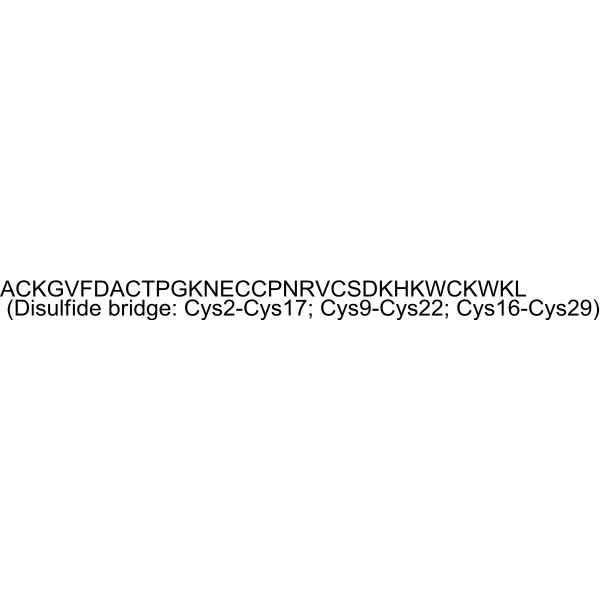 0 ImagesCat. No.: HY-P5179CAS No.: 769973-37-7Synonyms: HWTX-IHuwentoxin I (HWTX-I) is a peptide toxin that inhibits voltage-gated sodium channels and N-type calcium channels. Huwentoxin I inhibits sodium channels in rat hippocampus and cockroach dorsal unpaired median (DUM) neurons with IC50 values of 66.1 and 4.80 nM, respectively.
-
Dezinamide
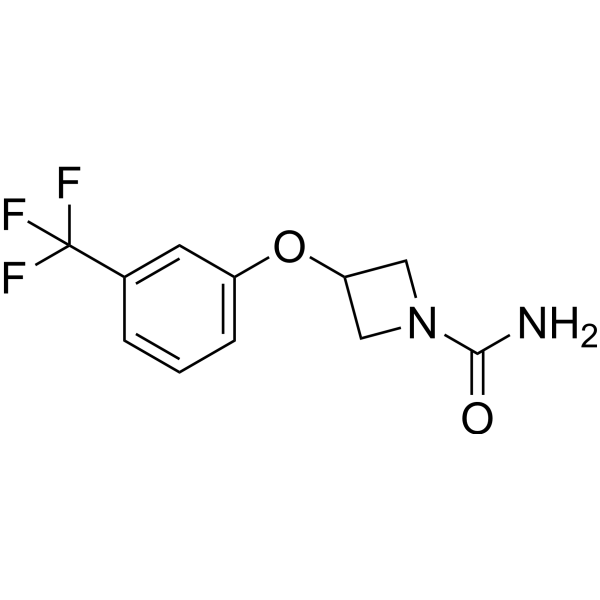 0 ImagesCat. No.: HY-111157CAS No.: 91077-32-6Synonyms: AHR11748; AN051; ADD94057Dezinamide (ADD94057) is an antiepileptic agent. Dezinamide binds to the voltage-sensitive sodium channel.

-
Budiodarone
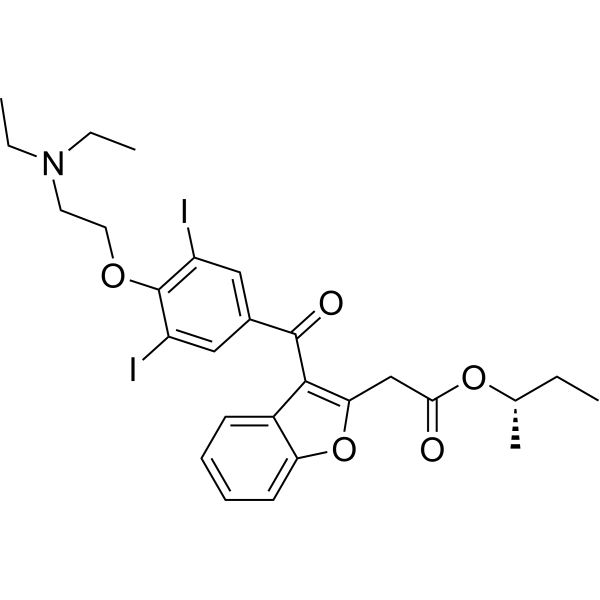 0 ImagesCat. No.: HY-14834CAS No.: 335148-45-3Synonyms: ATI-2042Budiodarone (ATI-2042) is an analogue of Amiodarone (HY-14187) with a half-life of 7 h. Budiodarone inhibits sodium, potassium, and calcium ion channels. Budiodarone is an antiarrhythmic agent and can be used for the research of atrial fibrillation.
-
AM-36
 0 ImagesCat. No.: HY-114659CAS No.: 199467-52-2AM-36 is a neuroprotective agent with combined antioxidant and sodium channel blocking actions. AM-36 can inhibit cell apoptosis and ROS prodiction. AM-36 can reduce neuronal damage and DA release after middle cerebral artery occlusion in rats. AM-36 can be used for the researches of inflammation and neurological disease, such as stroke.
-
PF-06456384
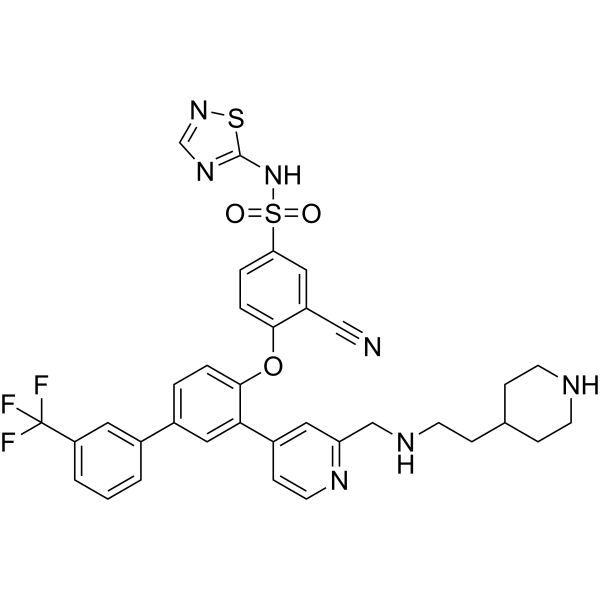 0 ImagesCat. No.: HY-118952CAS No.: 1834610-73-9PF-06456384 is a highly potent and selective NaV1.7 inhibitor with an IC50 of 0.01 nM. PF-06456384 has the potential for formalin pain model research.
-
Tat-ASIC1a (1-20) (mouse, rat)
 0 ImagesCat. No.: HY-P10977Tat-ASIC1a (1-20) (mouse, rat) is a competitive ASIC1a membrane-penetrating peptide. Tat-ASIC1a (1-20) (mouse, rat) has significantly neuroprotection effects, and reduces neuronal damage against acidotoxicity by targeting the ASIC1a-RIPK1 pathway and auto-inhibitory mechanism. Tat-ASIC1a (1-20) (mouse, rat) effectively protects brains from ischemic injury in ischemic stroke mice model. Tat-ASIC1a (1-20) (mouse, rat) can be used for neurodegenerative diseases research, such as Huntington disease and Parkinson’s disease.
-
Voluloride
 0 ImagesCat. No.: HY-109141CAS No.: 1498299-91-4Voluloride is a conjunctival epithelial cell sodium channel (ENaC) blocker. Voluloride can be used for the study of eye diseases.
-
Nav1.8-IN-1
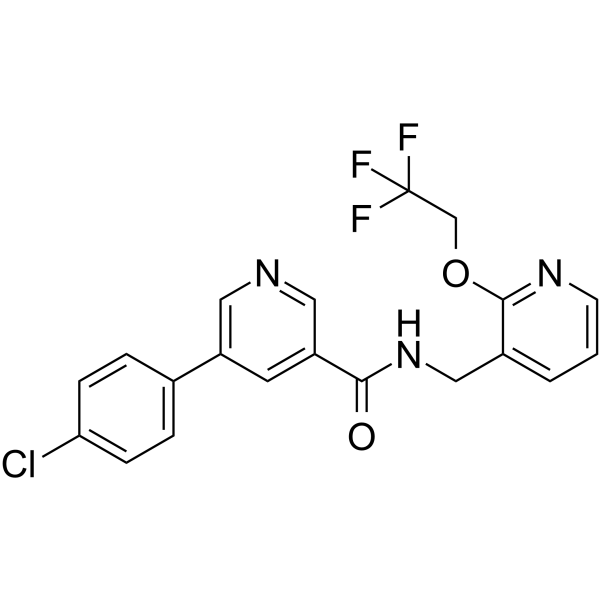 0 ImagesCat. No.: HY-132133CAS No.: 1026822-49-0Nav1.8-IN-1 (Compound 31) is a potent inhibitor of Na(v)1.8 sodium channel. Nav1.8-IN-1 has the potential for the research of inflammatory and neuropathic pain.
-
Mambalgin 1
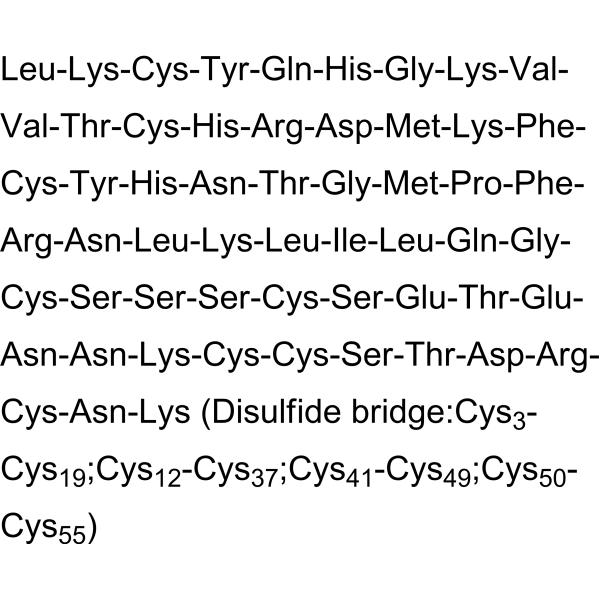 0 ImagesCat. No.: HY-P1441CAS No.: 1609937-15-6Mambalgin-1 is a toxin isolated from black mamba venom. Mambalgin-1 is a disulfide-rich polypeptide consisting of 57 amino acids and belongs to the family of three-finger toxins. Mambalgin-1 can bind to and stabilize ASICs (acid-sensing ion channels) in a physiologically relevant closed-channel conformation.
-
Jingzhaotoxin-V
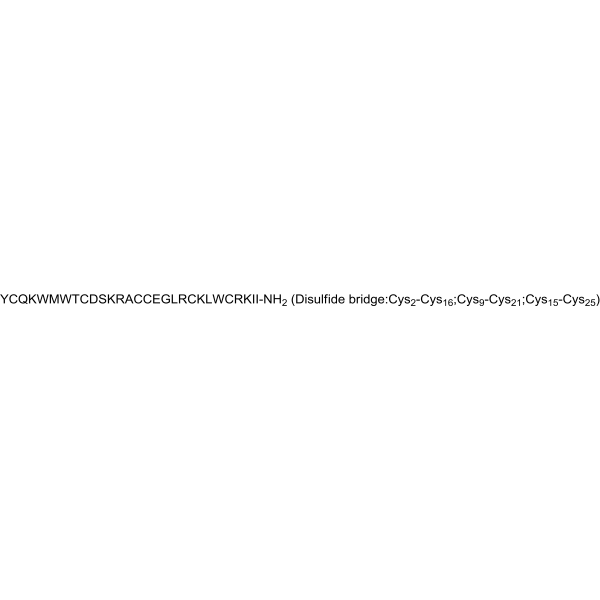 0 ImagesCat. No.: HY-P5770Jingzhaotoxin-V, a 29-residue polypeptide, is derived from the venom of the spider Chilobrachys jingzhao. Jingzhaotoxin-V inhibits tetrodotoxin-resistant and tetrodotoxin-sensitive sodium currents in rat dorsal root ganglion neurons with IC50 values of 27.6 nM and 30.2 nM, respectively. Jingzhaotoxin-V also inhibits Kv4.2 potassium currents expressed in Xenpus Laevis oocytes (IC50 of 604.2 nM).
-
BW-4030W92
 0 ImagesCat. No.: HY-19282CAS No.: 130801-33-1Synonyms: 4030W92BW-4030W92 is a sodium channel blocker. BW-4030W92 induces ataxia.
-
NaPi2b-IN-3
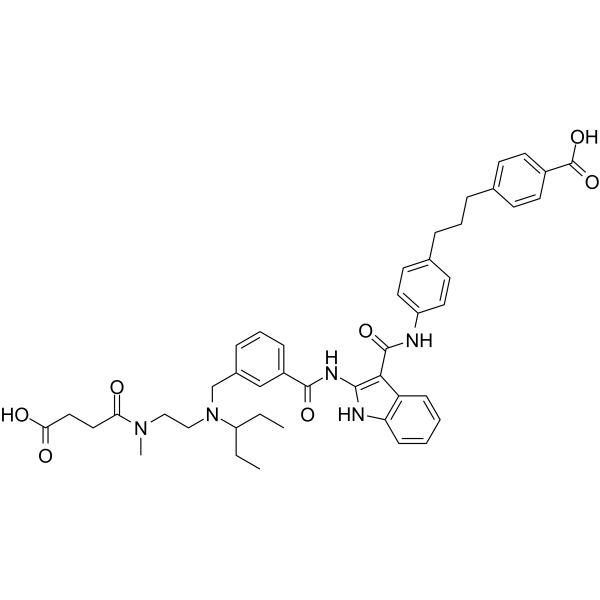 0 ImagesCat. No.: HY-146429CAS No.: 2227443-66-3NaPi2b-IN-3 (compound 5) is a potent sodium-dependent transport protein 2b (SLC34A2, NaPi2b) inhibitor with IC50s of 71 nM and 28 nM for human NaPi2b and rat NaPi2b, respectively. NaPi2b-IN-3 can be used for researching hyperphosphatemia.
-
DL-017
 0 ImagesCat. No.: HY-19291CAS No.: 149847-79-0DL-017 is a Quinazoline derivative. DL-017 shows inhibitory constants of approximately 0.90 nM for α1-adrenergic receptors and 404 nM for Na+ channels. DL-017 exerts antihypertensive effect.
-
Cyfluthrin-d6
 0 ImagesCat. No.: HY-B1837SCAS No.: 2483831-11-2Synonyms: β-Cyfluthi-d6Cyfluthrin-d6 (β-Cyfluthi-d6) is deuterium labeled Cyfluthrin. Cyfluthrin is a type II pyrethroid and has effects on various insects. Cyfluthrin is a modulator of Nav1.8 sodium channels by repetitive stimulation. Cyfluthrin can be applied in agriculture,veterinary, insecticide,pyrethroid and stored product.
-
Fosphenytoin disodium (Standard)
 0 ImagesCat. No.: HY-B1657ARCAS No.: 92134-98-0Fosphenytoin (disodium) (Standard) is the analytical standard of Fosphenytoin (disodium). This product is intended for research and analytical applications. Fosphenytoin sodium is a phenytoin proagent with similar anticonvulsant properties. Its main mechanism is to block frequency-dependent, use-dependent and voltage-dependent neuronal sodium channels, and therefore limit repetitive firing of action potentials.
-
Pterinotoxin-1
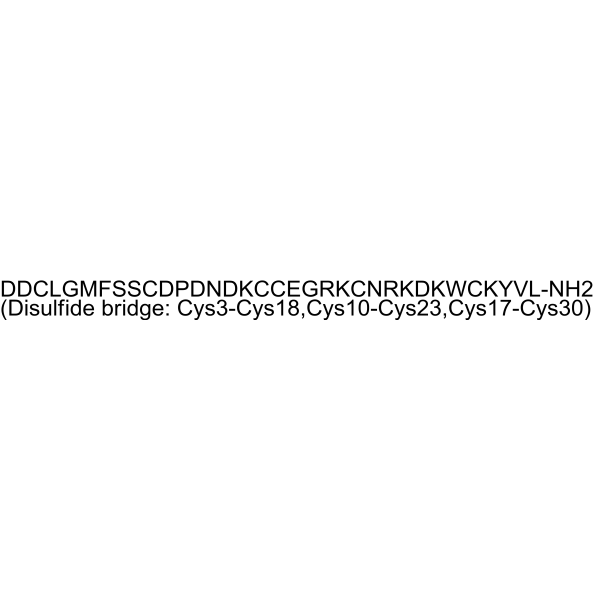 0 ImagesCat. No.: HY-P5943Pterinotoxin-1 is a sodium channel inhibitor peptide toxin.
-
Lidocaine-d6 hydrochloride
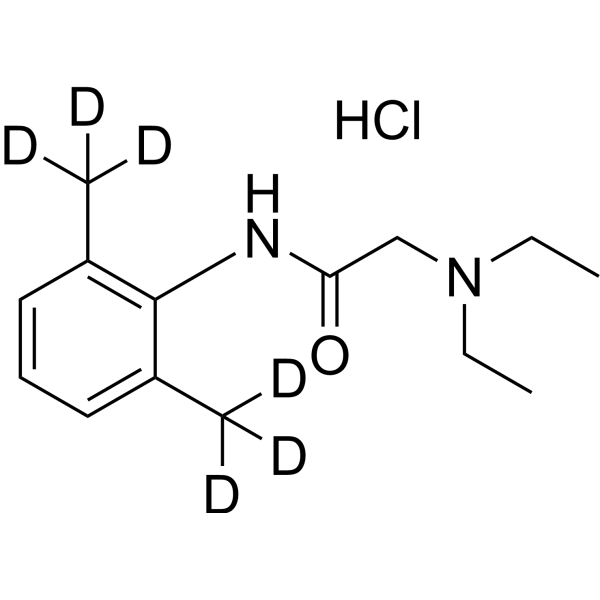 0 ImagesCat. No.: HY-B0185AS1CAS No.: 2517378-96-8Synonyms: Lignocaine-d6 hydrochlorideLidocaine-d6 (hydrochloride) is deuterium labeled Lidocaine (hydrochloride). Lidocaine hydrochloride (Lignocaine hydrochloride) inhibits sodium channels involving complex voltage and using dependence. Lidocaine hydrochloride decreases growth, migration and invasion of gastric carcinoma cells via up-regulating miR-145 expression and further inactivation of MEK/ERK and NF-κB signaling pathways. Lidocaine hydrochloride is an amide derivative and a agent to treat ventricular arrhythmia and an effective tumor-inhibitor.
-
BmK-M1
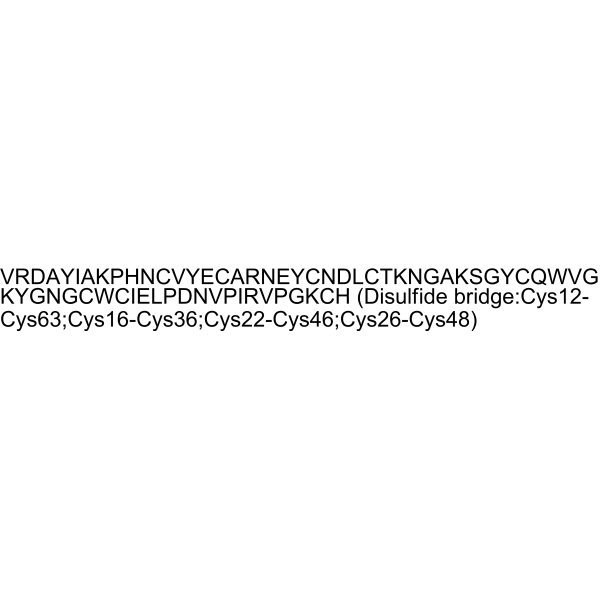 0 ImagesCat. No.: HY-P5816BmK-M1 is a scorpion toxin, and is composed of 64 amino acids cross-linked by four disulfide bridges. BmK-M1 inhibits Na+ channel and can be considered both as a cardiotoxin and a neurotoxin.




